28102026Wed
FHC side banner

BASC works with Law Commission to improve firearms law

The British Association for Shooting and Conservation (BASC) will be working with the Law Commission – the independent body which keeps the law of England and Wales under review and recommends reforms – on the future of firearms law.

The Commission, which recently issued a scoping consultation paper, is looking at questions such as the definition of lethality and antiques, what constitutes a component part of a firearm, the standard for deactivation and the case for fundamental reform of the law.

Before publishing the consultation the Law Commission held discussions with BASC’s expert firearms team, among others.


Food fraud – the crime in our shopping baskets

Fraud in the food sector doesn’t just risk public health, it denies consumers the quality of produce they’ve paid for and undermines the profits of food companies, according to fraud experts.

Professor Lisa Jack is head of the Food Fraud Group at the University of Portsmouth and gave evidence to Professor Chris Elliott’s review of food safety, commissioned to review food safety after the 2013 horse meat scandal and published today.

She and Jim Gee, director of Counter Fraud Services for BDO, a leading member of the University’s Centre for Counter Fraud Studies group, and the first to begin extensive research into the financial cost of fraud to the food industry, were commenting in the wake of the Elliott Review.

Expert views sought on bovine TB measures

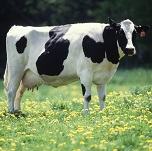
Picture of a cow for Your Expert Witness storyA consultation is being held by the Department for Environment, Food and Rural Affairs (DEFRA) on additional measures to strengthen bovine TB cattle controls to prevent the spread of the disease.

The consultation was launched on 11 June, when statistics were published showing the rate of new herd infections at its lowest point for 10 years.

The latest statistics show that the monthly incidence rate, which is the proportion of new outbreaks discovered through testing, was around 3.25%. That is the lowest rate since 2004 and follows a similarly low rate in February of 3.5%.

Consultation launched on pig meat inspection

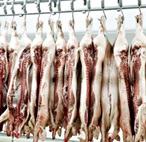
Picture of pigs hanging up for your Expert witness storyOn 25 March the Food Standards Agency launched a six-week consultation on new rules for pig meat inspections which come into force in June. The new rules are being introduced across the European Union and will help official veterinarians and meat inspectors to target public health risks better, while providing a more proportionate and risk-based inspection regime.

The new rules will focus on the visual inspection of all pigs and will mean health checks can be carried out in a way that reduces the risk of bacteria being spread around the meat.

Scientific evidence has shown that hands-on inspection – where the carcass and offal is handled and cut – can spread harmful bacteria. Hands on inspection will still be carried out, but only where information from the farm or visual inspection at the abattoir has identified potential concerns.

There will also be stricter rules for salmonella control and more risk-based testing for the parasite trichinella.

The consultation, which runs until 6 May, is seeking views on the practical application of the changes in the UK and the costs, benefits and wider impacts for stakeholders.

Steve Wearne, director of policy at the FSA, said: “The current system needs modernising. Our meat hygiene controls were developed more than a century ago to tackle the health concerns of the day. A modernised inspection system will protect consumers better and be more proportionate to slaughterhouses that control risks effectively.

“We want to ensure the new controls are proportionate and take into account the views of producers and consumers of pork. We look forward to hearing all of the views that come out of this consultation.”


Management of deer populations exercises Scottish Parliamentary committee

Picture of the Deer Park in Glengoulandie from geograph.org.uk for Your Expert Witness storyProgress on creating and implementing effective deer management plans across Scotland is too slow and some deer management groups lack public accountability, according to the Rural Affairs, Climate Change and Environment Committee.

Convener of the committee, Rob Gibson MSP, said: “There is no doubt that this is a controversial subject with strong views on either side of the debate. What was clear from the evidence our committee heard was that we need deer management groups to be effective and environmentally responsible, bringing in all interests, not just those of landowners. At the moment, the picture is patchy and inconsistent.

“The committee considers that there is no definitive evidence of the need to introduce a statutory duty of sustainable deer management for deer management groups at this point in time. However, if all deer management groups do not get their act together, this committee will have no choice but to recommend further action.”

In a letter to the Minister for Environment and Climate Change, Paul Wheelhouse MSP, outlined the wide-ranging and unanimous conclusions the committee came to. In particular, the committee concurred with the agencies that it is the impacts of deer rather than their absolute numbers that is most important when considering appropriate approaches to deer management.