

28102026Wed
FHC side banner

DVD age rating to be extended and Wi-Fi made ‘family friendly’
help key pictureThe government has announced that more DVDs are to carry age rating and more is to be done on online age ratings. Age ratings will be given to a range of video content that is currently exempt – such as some music and sports DVDs – so that those unsuitable for younger children will have to carry a British Board of Film Classification (BBFC) age rating in future.

The announcement on 24 May was made jointly by the Department for Education and the Department for Culture, Media and Sport.

The Government will also be announcing plans for public Wi-Fi providers to filter websites in public places to give parents the peace of mind that children will be protected from inappropriate websites when away from home.

Law Society applauds Lords committee report on EU opt-out

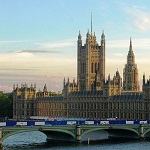
Picture of House of Lords for Your Expert witness storyA report by the European Union Select Committee of the House of Lords which raises serious concerns about the proposed EU criminal justice opt-out has attracted support from the Law Society. The society described the report, EU police and criminal justice measures: the UK's 2014 opt-out decision as a “compelling analysis”.

The report considers whether or not the UK should opt out of approximately 130 EU police and criminal justice measures. It echoes the Law Society’s concerns about the practical impact of an opt-out and the unnecessary cost likely to result. Many of the measures promote co-operation between EU countries and are vital in tackling cross-border crime, the society says. The role of the Court of Justice of the EU in ensuring the uniform application of EU law across the Member States is also recognised.

Lords criticise UK and Scottish governments for lack of clarity on independence

Picture of the Scottish Saltire for Your Expert Witness storyThe House of Lords Economic Affairs Committee has, over recent months, been considering the potential economic impact of Scottish independence on the economies of Scotland and the rest of the UK ahead of the referendum to be held on 18 September 2014.
Its second report was published on 10 April and was critical of both the UK and Scottish governments for “failing to spell out all the possible consequences of a ‘Yes’ vote in the referendum,” according to a report in the newsletter Public Service.

The Committee considered a broad range of economic questions, including defence spending and Trident renewal, monetary policy, the future of North Sea oil and possible division of the UK’s national debt.

Commons committee calls for tax avoiders to be ‘named and shamed’

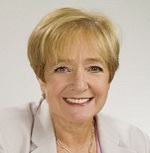
Picture of Margaret Hodge MP for your Expert Witness storyThe House of Commons Public Accounts Committee has called on HMRC to "name and shame" those who sell or use tax avoidance schemes. The promoters of such schemes are "running rings" around the tax authority, said its chair Rt Hon Margaret Hodge MP (pictured).

The call came in the committee's report of an investigation into marketed tax avoidance schemes, during which evidence was taken from HMRC itself, together with a number of promoters of such schemes.

Margaret Hodge said: "Promoters of 'boutique' tax avoidance schemes like the one brought to our attention by the case of Jimmy Carr, are running rings around HMRC. They create schemes which exploit loopholes in legislation or abuse available tax reliefs such as those intended to encourage investment in British films, and then sign up as many clients as possible, knowing that it will take time for HMRC to change the law and shut the scheme down.

Scotland’s transition plans published

A Saltire to illustrate Scottish independence story in your Expert WitnessA paper outlining the process of Scotland’s transition to an independent country, should next year’s referendum go in favour of independence, has been published by its Deputy First Minister Nicola Sturgeon.

The paper, Scotland’s Future: from the referendum to independence and a written constitution, outlines a timetable for transition, with ‘independence day’ scheduled for March 2016, immediately ahead of the May 2016 Scottish parliament election. That, said the government, is in line with international precedent: of the 30 countries around the world that have become independent since 1945 following a referendum, the average length of time between the referendum and independence has been around 15 months.

Its publication comes just days after the Electoral Commission called on both sides of the campaign to set out the process following the referendum.