

28102026Wed
FHC side banner

UK arrests form part of international crackdown on Blackshades

A total of 17 suspected users of software designed to take over, control and steal information from personal computers have been arrested in the first ever UK-wide cybercrime operation. Co-ordinated by the National Crime Agency, a week of arrests, searches and seizures in mid-May involved nearly every UK Regional Organised Crime Unit (ROCU), as well as Police Scotland and the Metropolitan Police.

The UK investigation formed part of a wave of global activity targeting the developers and prolific users of Blackshades, a set of malware tools sold online for under £100. Initiated by the FBI and co-ordinated in Europe through Eurojust and the European Cybercrime Centre (EC3) at Europol, the international effort has resulted in the apprehension of dozens of suspected users.

Cyber security experts of the future strut their stuff

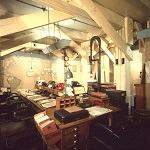
Picture of the Churchill War Rooms for Your Expert Witness storyA two-day event on 14-15 March saw the culmination of a year-long competition to find the future experts with the cyber security skills the country needs to stay at the cutting edge in today’s digital world.
The final of the Cyber Security Challenge, a competition sponsored by GCHQ, BT, the National Crime Agency – which includes the National Cyber Crime Unit (NCCU) – and others, took place in the appropriate setting of the Churchill War Rooms (pictured), an underground bunker in central London which is part of the Imperial War Museum. It provided an atmospheric backdrop for the competition, with war sirens howling and red lights flashing as candidates received new information to help them investigate the cyber incident that was unfolding.

Weather experts showcase risk-minimising solutions at offshore conference

Picture of a laptop with Safesee for Your Expert Witness storyMinimising risks and uncertainty when developing offshore wind farms will be a key topic explored by the Met Office at this year's Offshore Wind & Supply Chain conference in Aberdeen.

The Met Office's Alex Hill, Chief Advisor to the Governments of Scotland and Northern Ireland, will give the keynote speech at a breakfast seminar on 29 January. The talk – De-risking the weather element of an offshore project throughout the lifecycle – will discuss how the latest forecasting techniques will help to remove some of the risks and uncertainty associated with the development of offshore wind farms.

Online child abusers targeted at summit chaired by PM

Picture of computer keyboard for Your Expert Witness storyOn 18 November Prime Minister David Cameron met with the internet search engines, Internet Service Providers (ISPs), Facebook’s European boss Joanna Shields, the National Crime Agency, Internet Watch Foundation and the NSPCC in Downing Street to discuss how to rid the internet of child abuse.

Those attending agreed action to block child abuse search results worldwide, to help people search the internet safely, to continue to work to bring offenders to justice and a series of further steps to help remove child abuse from the internet.

Animated evidence can confuse juries, research finds

Animation of car crash for Your Expert Witness storyThe use of animated evidence in court can confuse and bias a jury, according to new research carried out at Aberystwyth University.

Computer-generated evidence (CGE) is frequently used in courts as a technique with which to demonstrate complex sequences of events, or collate different pieces of evidence into a more coherent picture. Famously used in the trials of Amanda Knox and in presenting evidence against Oscar Pistorious, one of the advantages of CGE is that it allows a number of different viewpoints to be examined in a way which is often not possible with still images. However, research suggests that using CGE may confuse and bias juries, leading to dangerous errors in judgement.

The research by Professor Gareth Norris, a professor of criminology in the university’s Department of Law and Criminology, will be presented at an event as part of the Economic and Social Research Council’s (ESRC) annual Festival of Social Science in November.