28102026Wed
Translate Hive

New fraud law will help build an ‘anti-fraud culture‘

News Story picA new corporate criminal offence of ‘failure to prevent fraud’ came into effect on 1 September – designed to drive an anti-fraud culture and improve business confidence. 

Introduced as part of the Economic Crime and Corporate Transparency Act (ECCT) 2023, the offence will hold large organisations to account if they profit from fraud. It forms part of wider measures introduced by the government to tackle fraud and protect the UK economy, as part of the Plan for Change. 

The offence of ‘failure to prevent fraud’ follows major steps forward on fraud prevention including: 

• Pushing forward with a ban on SIM farms – technical devices which facilitate fraud on an industrial scale
• A bilateral agreement with the insurance sector
• Adopting the first ever UN resolution on fraud


FHC Experts for Law & Mediation – Celebrating 25 Years

25 years e1705424975566As part of our 25 years trading celebrations, Forensic Healthcare Services have chosen Farleigh Hospice as our nominated charity. The team will be taking part in various activities throughout the year, such as 10k walks, sky dives and linking with local schools to raise money.
We are hoping to reach our target of £10,000 with FHC and its experts making donations to the charity as well.

Farleigh Hospice is a charity very close to both Judy Payne-James' and Alex Earl's hearts as they unfortunately lost their mums in 2022. Without the care and dedication from Farleigh Hospice, their mums would not have been provided with the vital help and comfort they needed in their last few weeks. Supporting Farleigh was an easy choice to make.   

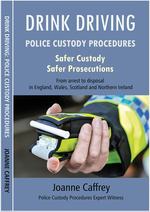
New book is the expert’s guide to drink drive prosecutions

Joanne Caffrey picIn the UK it is not unlawful to drink and drive. It is only unlawful to drive while above the prescribed limit of alcohol or be unfit to drive through the amount of alcohol consumed.The prescribed limit also differs around the UK. Scotland, for example, has a stricter level than England, Wales and Northern Ireland.

Prosecutions of suspected drink drivers sometimes fail because the police fail to follow correct procedures.

As an ex-police custody sergeant, police trainer and now expert witness, Joanne Caffrey has conducted in excess of 1,000 evidential drink drive procedures, taught officers what they should be doing, and provided courts with reports for what the officers did or did not do.

Time and time again prosecutions fail because officers do not comply with basic fundamental principles and practices in law, or lack knowledge and confidence in which procedure they should be following.

Now, in this volume, Ms Caffrey outlines the real-life procedures for bringing a prosecution.She explains: “Law books are available which discuss the legislation and case law, but what this book brings to the reader is the holistic safer custody process to safeguard the prosecution and safeguard the detainee, preserving life whilst not losing evidence. I use my experience to draw upon real case examples of how prosecutions have failed against suspected drink drivers.”

The book is aimed at all police staff – from the point of scene attendance to arrest, transport and the custody unit ‘station procedures’. Defence and prosecution teams will also find it extremely useful to understand what should have occurred.

New wording for Statement of Truth comes into effect

0n8411Expert witness organisations are drawing experts’ urgent attention to an amendment to the Statement of Truth they must include in their reports. The 122nd update to the Practice Direction for the Civil Procedure Rules makes the new wording mandatory and came into effect from 1 October this year.

The new Statement of Truth that should be used reads: “I confirm that I have made clear which facts and matters referred to in this report are within my own knowledge and which are not. Those that are within my own knowledge I confirm to be true. The opinions I have expressed represent my true and complete professional opinions on the matters to which they refer.

“I understand that proceedings for contempt of court may be brought against anyone who makes, or causes to be made, a false statement in a document verified by a Statement of Truth without an honest belief in its truth.”