


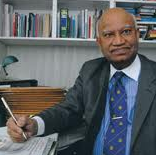
 “Speculate before you accumulate. I am a long term regular writer and advertiser in 'Your Expert Witness - the Solicitor’s Choice'. This investment pays me substantive dividends; I get more Expert Witness work with every issue. Not only solicitors and barristers but also judges seem to read it. It is a win-win situation. Success breeds success; I must continue to write and advertise.”




















































































A soldier who died of heat exhaustion while fighting in Iraq was not protected by the Human Rights Act, the Supreme Court has ruled.
Throwing out the claim, Lord Phillips said: “The contention that a state’s armed forces, by reason of their personal status, fall within the jurisdiction of the state for the purposes of article 1 is novel.”
The case was heard at the request of the Ministry of Defence, following a dispute in the Royal Courts of Justice over the verdict of an inquest.
Private Jason Smith died after enduring 50 degree heat while stationed in a disused athletics stadium 12 km away from the army base. His mother lodged an appeal against the inquest verdict, which stated that her son died following “a serious failure to address the difficulty he had in adjusting to the climate”.
Mrs Smith, represented in court by James Eadie QC at the instruction of the treasury solicitor, had argued that her son was protected by the European Convention on Human Rights (ECHR), and that the original inquest was flawed because it did not meet the procedural requirements of article 2 (right to life).
Defence secretary Bob Ainsworth denied that a soldier on military service abroad was covered by the convention when outside his base, but agreed a fresh inquest could be heard while the issue was properly addressed in the courts.
Rejecting the claim that soldiers are subject to rights while outside their base, Lord Hope said: “Those who join the armed services as volunteers accept the obligation to comply with military discipline.”
He also raised the arguments of former president of the European Court of Human Rights, Luzius Wildhaber, who feared such an extension of the convention would leave the court having to make judgments on cases where there was no guarantee the evidence from ‘beyond the frontiers’ would be reliable.
Grant Evatt, senior solicitor in Blake Lapthorn's personal injury team and coordinator of the Military Special Interest Group of the Association of Personal Injury Lawyers (APIL), commented: “The outcome is disappointing but not surprising. This case was not about lawyers dictating what happens on the battlefield. It instead concerned our desire, as a nation, to ensure there is a legal framework in place to protect our service people who put their lives at risk day in day out in the service of their country.”
In R (on the application of Smith) v The Secretary of State for Defence and another [2010] UKSC 29, Lord Mance, Lord Kerr and Lady Hale dissented.
Lady Hale stated: “It is not at all clear what this court is doing. We are merely making observations on two extremely important and interesting questions but we are not deciding anything.”
The court unanimously dismissed the Ministry of Defence’s second argument, ruling that the inquest had not met the requirements of article 2 of the ECHR.