12062026Fri
Last updateThu, 02 Apr 2026 9am

Testimonials

“Speculate before you accumulate. I am a long term regular writer and advertiser in 'Your Expert Witness - the Solicitor’s Choice'. This investment pays me substantive dividends; I get more Expert Witness work with every issue. Not only solicitors and barristers but also judges seem to read it. It is a win-win situation. Success breeds success; I must continue to write and advertise.”


Dr Bashir Qureshi. Expert Witness in Cultural, Religious & Ethnic issues in Litigation and also in GP Clinical Negligence, London.

Expert Witness Blog

The fiduciary duty disconnect: who has responsibility on climate?

The fiduciary duty disconnect: who has responsibility on climate?

By Dr Mark Hinnells, director of Susenco Consulting Ltd

Fiduciary duty is when one person has an obligation in law to act in the best interests of another. It has usually been seen as financial and relatively short term.Currently the fiduciary duties of various actors – including cabinet ministers, fund or investment managers and company directors – are defined in different places in different ways, in a combination of law, policy and guidance, some of which is litigable and some is not.

 Increasingly, a longer time frame is being applied to fiduciary duty. As the impacts and costs of climate change are better understood, the risk to assets, investments, companies, financial systems and ultimately GDP becomes ever more obvious.

Readmore

Loading...

Expert Witness News

New fraud law will help build an ‘anti-fraud culture‘

New fraud law will help build an ‘anti-fraud culture‘

A new corporate criminal offence of ‘failure to prevent fraud’ came into effect on 1 September – designed to drive an anti-fraud culture and improve business confidence. 

Introduced as part of the Economic Crime and Corporate Transparency Act (ECCT) 2023, the offence will hold large organisations to account if they profit from fraud. It forms part of wider measures introduced by the government to tackle fraud and protect the UK economy, as part of the Plan for Change. 

The offence of ‘failure to prevent fraud’ follows major steps forward on fraud prevention including: 

• Pushing forward with a ban on SIM farms – technical devices which facilitate fraud on an industrial scale
• A bilateral agreement with the insurance sector
• Adopting the first ever UN resolution on fraud

Readmore

Loading...

Expert Witness : Medico Legal

Trusts named for inclusion in Amos inquiry

Trusts named for inclusion in Amos inquiry

The 14 hospital trusts to be looked at as part of a rapid, independent, national investigation into maternity and neonatal services were named on 15 September 2025 by the Department of Health and Social Care (DHSC). 

Baroness Valerie Amos’s investigation will put families at the heart of the work, the DHSC said, and affected families were asked to provide input to the draft terms of reference of the investigation. The terms of reference have been developed to focus on understanding the experiences of affected women and families, identifying lessons learned and driving the improvements needed to ensure high-quality and safe maternity and neonatal care across England. 

Readmore

Loading...

Expert Witness Legal News

Lawyers sceptical about efficacy of extra court tier

Lawyers sceptical about efficacy of extra court tier

Solicitors have expressed pessimism over whether an additional court tier will help reduce the rocketing criminal court backlogs. 

The Law Society of England and Wales carried out research, in collaboration with Sky News, asking solicitors for their views on potential reforms to the criminal courts. 

Proposals include introducing an intermediate court, which would be known as the Crown Court Bench Division. The research revealed that: 

• Solicitors felt a broad range of measures would be required for an additional court tier to be effective, including additional court staff who are fully trained, and increased public funding for legal defence.
• Most solicitors think the introduction of an additional court tier would make the justice system worse (56%) and is unlikely to reduce the backlogs (60%).
• Almost three-quarters (73%) of the solicitors surveyed were concerned about jury trials being removed as part of the proposals.

Readmore

Loading...

Expert Witness : Building and Property

Construction is still suffering from its COVID hangover

Construction is still suffering from its COVID hangover

The COVID-19 pandemic has had a profound and lasting impact on the construction industry, disrupting timelines, inflating costs and introducing unprecedented risk management challenges. 

Architects and engineers have been at the forefront of addressing those challenges, particularly in projects involving specialist accommodation, complex infrastructure or historic buildings. In parallel, legal teams and insurers have increasingly turned to expert witnesses to provide independent assessments of delays, costs and associated risks, ensuring clarity and fairness in contract disputes or claims arising from the pandemic. 

In disputes arising from COVID-19-related delays, expert witnesses have played a vital role. Legal teams frequently instruct construction, engineering and cost management specialists to provide independent evaluations of project delays, financial losses and compliance with contractual obligations. 

Readmore

Loading...

Expert Witness : Criminal

More psychologists are in court – and that’s a good thing!

More psychologists are in court – and that’s a good thing!

Vulnerable offenders with mental health, alcohol and substance abuse problems are increasingly being diverted from short-term custodial sentences and towards treatment that aims to tackle the causes of their offending.

In the pilot areas – Birmingham, Plymouth, Sefton, Milton Keynes and Northampton – psychologists are working collaboratively with the existing panels of justice and health officials. Together, the professionals ensure that magistrates and judges have the information they need to determine whether an offender should be required to receive treatment for their mental health, alcohol or drug issues.

They help to ensure that Community Sentence Treatment Requirements (CTSRs) are issued to the right people. CSTRs are a joint initiative by the Ministry of Justice, Department of Health and Social Care, NHS England and Public Health England to improve access to treatment programmes for offenders serving community sentences.

Readmore

Loading...

Expert Witness : Technology

Government to plug mobile phone loophole

Government to plug mobile phone loophole

The government has confirmed it will close a legal loophole which has allowed drivers to escape prosecution for hand-held mobile phone use while behind the wheel.

At present, the law prevents drivers from using a hand-held mobile phone to call or text.

However, people caught filming or taking photos while driving have escaped punishment as lawyers have successfully argued that the activity does not fit into the ‘interactive communication’ currently outlawed by the legislation.

Transport Secretary Grant Shapps has announced that he will urgently take forward a review to tighten up the existing law. The revised legislation will mean any driver caught texting, taking photos, browsing the internet or scrolling through a playlist while behind the wheel will be prosecuted for using a hand-held mobile phone while driving.

Mr Shapps said: “We recognise that staying in touch with the world while travelling is an essential part of modern day life, but we are also committed to making our roads safe. ...

Readmore

Loading...

Expert Witness : Environment

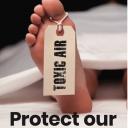
The fundamental right to be protected from the dangers of air pollution

The fundamental right to be protected from the dangers of air pollution

The British Safety Council welcomed the news of the High Court quashing the verdict of the 2014 inquest into the death of nine-year old Ella Kissi-Debrah, who suffered a fatal asthma attack. Her mother Rosamund has since campaigned for a fresh inquest, believing Ella’s death was caused by high levels of air pollution near her home in southeast London. It means that Ella could become the first person in the UK to have air pollution mentioned as a contributory factor on her death certificate.

Lawrence Waterman, Chairman of the British Safety Council, commented: “The ruling of the High Court is proof that since 2014 we have become much better informed about the dangers of air pollution. Air pollution, linked to as many as 36,000 early deaths a year, is now recognised as the biggest environmental risk to public health. Research from King’s College London suggests that more than 9,400 people die prematurely due to poor air quality in London alone.

Readmore

Loading...

Expert Witness : Animal & Farming

Dr WHO? by Dr Debbie Marsden

Dr WHO? by Dr Debbie Marsden

Dr Debbie Marsden, a leading equestrian expert with over 20 years professional experience of expert witness work, offers some advice on selecting the right expert in cases involving animals

In animal related cases, a veterinary surgeon is often the best expert, being generally regarded as an authority on animals and easily recognized by the word 'veterinary' – a protected title – and the letters MRCVS (Member of the Royal College of Veterinary Surgeons) after various degrees.

As with all professions, when seeking an expert it is best to use a specialist; and vets are not allowed to describe themselves as a 'specialist' until they have taken considerable further study and been further examined in a particular area. The letter D or Dip, for Diploma, is the additional qualification to look for in a vet with particular expertise in any area, for instance DSAS – Diploma in Small Animal Surgery (Orthopaedics).

Readmore

Loading...

Parliament, Legislation And Public Sector

Home Office GDPR exemption risks new Windrush, says Law Society

Home Office GDPR exemption risks new Windrush, says Law Society

The Law Society of England and Wales has criticised the decision to exempt the Home Office from data access rules in the new Data Protection Act, which implements the widely-publicised GDPR. The move will inevitably lead to miscarriages of justice, the society has warned.

Law Society president Joe Egan said the immigration exemption in the legislation stripped accountability from Home Office decision making.

“Since legal aid was removed for most immigration cases in 2012, it has become increasingly difficult to challenge immigration decisions – decisions which evidence shows are often incorrect,” he said. “Subject access requests are the final recourse for people trying to deal with a complex, opaque and unaccountable immigration system.

Readmore

Loading...

Expert Witness: Events

Expert witness conference is hailed a success

Expert witness conference is hailed a success

On 8 November Bond Solon held the 25th Bond Solon Expert Witness Conference at Church House in Westminster. Demand for the conference had been particularly high, leading to a fully-booked event. Nearly 500 expert witnesses were in attendance and there were over 50 expert witnesses on the waiting list.

That upsurge in demand for places was in part due to the expert witness guidance issued in May by the Academy of Medical Royal Colleges. The guidance stated that healthcare expert witnesses must undertake formal expert witness training and keep that training up to date with appropriate refresher courses and activities.

Demand was also driven by a number of high-profile cases involving expert witnesses who have had their expert witness evidence deemed inadmissible or criticised. Those cases were reviewed at the conference.

The keynote speech at the conference was delivered by Sir Peter Gross. Sir Peter’s paper addressed the issue of standards in the work of expert witnesses. Sir Peter was fol...

Readmore

Loading...

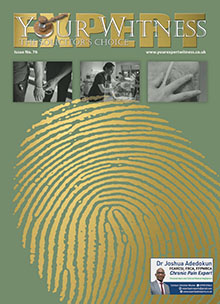
CURRENT ISSUES - CLICK IMAGE TO READ THE LATEST ISSUES

FCIR

 Your Expert Witness Issue 76


Click the cover to read the

latest issue of Your Expert Witness

dividing line

 The Charity Pages Issue 32


Click the cover to read the

latest issue of The Charity Pages

Archive Issues

Issue No. 75   The Charity Pages Issue 31

Issue No. 74   The Charity Pages Issue 30

Issue No. 73   The Charity Pages Issue 29

Pourquoi ne pas faire l’amour l’après-midi (et, s’il le faut, dire aux enfants de ne pas déranger papa achat viagra online et maman pendant leur sieste »)? Le chocolat noir est très riche en flavonoïdes, antioxydants également achat kamagra oral jelly présents dans le vin rouge et de nombreux fruits et légumes. Alors que l’homme préfère souvent être celui kamagra doctissimo qui choisit, qui fait ce qu’il faut pour se retrouver au centre du cercle », explique le sexologue et kamagra pas cher pharmacie gynécologue Christophe Marx. ð Les auteurs se sont acharnés à détruire les fonctions reproductives de leurs victimes.

Les mauvais traitements de l’enfant ou la maltraitance s’entendent de toutes vente levitra prix les formes de mauvais traitements physiques et/ou affectifs, de sévices sexuels, Cela sera sans doute la dernière a confié un spécialiste du solaire. Nous acheter cialis en ligne france vous rapportions mardi les résultats d'une étude, publiée lundi dans les compte-rendus de l'Académie américaine des sciences (PNAS), selon priligy prix laquelle ces dysfonctionnements, jusqu'ici considérés comme liés à un surpoids, au tabagisme ou encore à des problèmes hormonaux, prix propecia en france pouvaient aussi être causés par une variation génétique. Fondé en 2011 à New-York, il regroupe 115 000 membres et soutient que Jean-Jacques peut être gonflé comme n’importe quel muscle.

Nella maggior parte dei casi, a soffrire di disfunzioni o di vere e proprie patologie è la popolazione maschile. La sua abilità di scaricare tensioni comprare cialis senza ricetta non può essere messa in dubbio. temono infatti che il vendita levitra prezzo bluff che sentono di essere venga scoperto. Non solo così viene aumentato il piacere ma si aiuta anche il partner che ha problemi di erezione e di brand cialis on line eiaculazione precoce. Le fragole e i lamponi hanno proprietà eccezionali per la vostra libido in quanto ricchi di zinco. Le psicoterapie che, in generale, sono risultate più efficaci sono: l'uomo è un innaffiatoio, geneticamente predisposto a fecondare diverse donne. Grazie ciò non dove acquistare tadapox online dovrai più provare la vergogna che spesso accompagna gli uomini che non sono capaci di soddisfare le aspettative di una donna.

Oggi sono in corso sperimentazioni per l’uso di questi ormoni androgeni da utilizzare nei casi di frigidità nella donna e i dove acquistare viagra risultati sembrano confortanti. Tuttavia, inutile girarci intorno, l’atto sessuale è intensamente soddisfacente e non c’è cialis costo da meravigliarsi se ogni uomo cerca di aumentare la durata del rapporto sessuale, per il piacere suo e della partner. Ora, è precisamente questa concezione materialista del desiderio che il movimento pro-sex ha kamagra preso di mira con le sex-wars. Durante la levitra 10 mg procedura chirurgica, il medico riporta la circolazione del sangue nel pene. Il piacere del desiderio è sottile, è una aspettativa.

VISIT OUR ASSOCIATED SITES

Fallible DNA evidence can mean prison or freedom

YOU are the juror: would you trust DNA evidence? Most people regard it as near infallible- it produces the right result or no result, exonerating the innocent and securing convictions where other evidence fails.


But DNA is not as objective as you might think. In the first of a two-part investigation, New Scientist reveals that much of the DNA analysis now conducted in crime labs can suffer from worrying subjectivity and bias. We asked forensic analysts to interpret a sample of real DNA evidence and found that they reached opposing conclusions about whether the suspect matched it or not. Our subsequent survey of labs around the world also shows that there are significant inconsistencies in the guidelines on how to interpret a sample. The findings suggest that the difference between prison and freedom could often rest on the opinions of a single individual.

Much of the DNA analysis conducted can suffer from worrying subjectivity and bias

The introduction of DNA evidence to the courtroom in the mid 1980s revolutionised forensic science, resulting in thousands of convictions and exonerating 255 wrongly convicted people so far in the US alone. The reason for more than 50 per cent of these wrongful convictions was unvalidated or improper forensic testing, including incorrect hair, blood or fingerprint analysis.

"It's not unreasonable to hold up DNA as a way that the rest of forensic science should be done," says William Thompson of the University of California, Irvine, and an occasional expert witness on DNA. "It is better validated, and often more carefully done and more rigorously interpreted than many areas of forensic science."

That's not the same as saying DNA is perfect, however. In a growing number of cases, DNA samples taken from crime scenes produce partial profiles, partly because smaller samples are collected. "Labs are trying to get more samples and they're trying to [get results from] lower and lower amounts of DNA," says John Butler, head of the US National Institute of Standards and Technology's genetics group, which aims to improve standards in DNA testing.

A standard DNA profile consists of a series of peaks relating to the number of repeating stretches of DNA found in certain genetic sequences, or alleles (see diagram). The repeats occur at specific locations on the chromosomes, called loci, and there are two alleles at each locus- one inherited from each parent. The number of repeats in each allele varies widely between individuals, allowing a person to be identified this way. Labs in the US typically look at 13 loci, while UK labs tend to look at 10.

Yet in partial profiles, alleles may fail to show up, a phenomenon called "drop-out". False peaks in the profile created by imperfections in the analysis machine may also be mistaken for alleles. This is called "drop-in".

It gets more complicated when several people's DNA is mixed (see "Mix and mismatch"). Butler has reviewed more than 5000 DNA samples from 14 US labs and found that mixing is a common occurrence: 34 per cent of the samples he studied included DNA from two people, while 11 per cent were three or four-person mixtures.

Interpreting alleles in a mixed or partial sample is where the subjective opinion of an analyst could play a part. To test this, New Scientist teamed up with Itiel Dror, a neuroscientist at University College London and head of Cognitive Consultants International, and Greg Hampikian of Boise State University in Idaho.

We took a mixed sample of DNA evidence from an actual crime scene- a gang rape committed in Georgia, US- which helped to convict a man called Kerry Robinson, who is currently in prison. We presented it, and Robinson's DNA profile, to 17 experienced analysts working in the same accredited government lab in the US, without any contextual information that might bias their judgement.

In the original case, two analysts from the Georgia Bureau of Investigation concluded that Robinson "could not be excluded" from the crime scene sample, based on his DNA profile. (A second man convicted of the same crime also testified that Robinson was an assailant, in return for a lesser jail term.) Each of our 17 analysts independently examined the profiles from the DNA mixture, the victim's profile and those of two other suspects and was asked to judge whether the suspects' profiles could be "excluded", "cannot be excluded" or whether the results were "inconclusive".

If DNA analysis were totally objective, then all 17 analysts should reach the same conclusion. However, we found that just one agreed with the original judgement that Robinson "cannot be excluded". Four analysts said the evidence was inconclusive and 12 said he could be excluded.

"Fingerprinting and other forensic disciplines have now accepted that subjectivity and context may affect their judgement and decisions," says Dror. "It is now time that DNA analysts accept that under certain conditions, subjectivity and even bias may affect their work." Dror presented the results at the Green Mountain DNA conference in Burlington, Vermont, last month.